Overview of AP Physics C Mechanics
AP Physics C Mechanics covers advanced kinematics, Newtonian dynamics, energy, and rotational motion. The exam tests conceptual understanding and quantitative problem solving. Students use calculus, vector analysis, and SI units to model real‑world systems, preparing for college physics courses. Study wisely!!!!
Exam Format and Scoring Overview
The AP Physics C Mechanics exam is divided into two sections: a 60‑minute multiple‑choice portion and a 45‑minute free‑response portion. The multiple‑choice section contains 55 questions, each with five answer choices. The free‑response section includes 5 problems that require detailed written solutions, often involving calculus, vector algebra, and Newton’s laws. Each free‑response problem is worth 10 points, with partial credit awarded for correct reasoning and intermediate steps.
Scoring is based on a 100‑point scale. The multiple‑choice section is scored by converting raw scores to a scaled score, with a maximum of 50 points. The free‑response section is scored directly, with a maximum of 50 points. A score of 5 is the highest possible, indicating mastery of all core concepts and the ability to solve complex problems. Scores of 4 and 3 reflect strong understanding, while 2 and 1 indicate limited proficiency. A score of 0 is given if the exam is not attempted or if the student fails to meet the minimum requirements.
Preparation strategies include practicing with past‑year exam questions, mastering the use of a scientific calculator for calculus‑based problems, and developing concise, well‑organized solution write‑ups. Time management is critical; students should allocate 1 minute per multiple‑choice question and 9 minutes per free‑response problem. Understanding the weighting of each problem type helps students focus their study efforts on areas that yield the highest impact on their overall score. Mastery of these elements is essential!!

Fundamental Concepts and Quantities
Students learn SI units, dimensional analysis, vectors, and fundamental quantities like mass, length, time, force, and energy. Mastery of unit conversions and dimensional consistency is essential for solving kinematic, dynamic, and energy problems accurately.!!!!!!!
Units, Dimensions, and SI Conventions

In AP Physics C Mechanics, mastery of SI units and dimensional analysis is critical. The base units—meter (m), kilogram (kg), second (s), ampere (A), kelvin (K), mole (mol), candela (cd)—form the foundation for all derived quantities. Derived units such as newton (N), joule (J), watt (W), and radian (rad) are expressed as combinations of base units: N = kg·m/s², J = N·m = kg·m²/s², W = J/s = kg·m²/s³, rad = m/m (dimensionless). Proper dimensional consistency ensures equations are physically meaningful; a common error is mixing units (e.g., using feet with meters). Dimensional analysis provides a powerful check: the dimensions on both sides of an equation must match. For instance, velocity has dimensions L/T (m/s), acceleration L/T² (m/s²), and force M·L/T² (kg·m/s²). Converting between units—such as centimeters to meters (1 cm = 0.01 m) or minutes to seconds (1 min = 60 s)—requires careful multiplication or division by the appropriate conversion factor. The AP exam expects students to perform these conversions on the fly, often within the same problem. Study guides recommend creating a quick-reference table of common conversions and practicing dimensional checks on sample problems. Additionally, the use of scientific notation and significant figures is emphasized, as many answers must be reported to the correct precision. By rigorously applying SI conventions and dimensional reasoning, students can avoid algebraic pitfalls and solve problems with confidence. Students should master SI prefixes like kilo‑ (10³), centi‑ (10⁻²), and milli‑ (10⁻³). Use throughout derivations prevents errors and keeps results dimensionally sound.
Kinematics and Motion
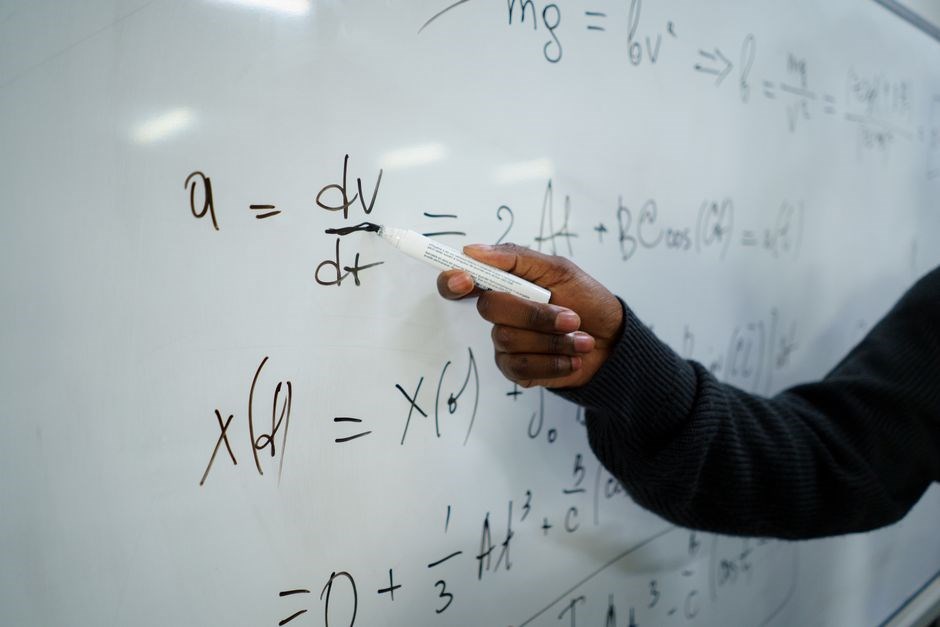
AP Physics C focuses on displacement, velocity, acceleration. Students derive equations of motion, analyze constant‑acceleration scenarios,and solve projectile problems using vector components. Mastery of kinematic formulas and graph interpretation is essential success.
One-Dimensional and Projectile Motion Equations
In AP Physics C, one‑dimensional motion is governed by the kinematic equations that relate displacement (Δx), initial velocity (v₀), final velocity (v), acceleration (a), and time (t). The primary formulas are:
- Δx = v₀t + ½at²
- v = v₀ + at
- v² = v₀² + 2aΔx
- Δx = ½(v₀ + v)t
These equations assume constant acceleration and a single axis of motion. For projectile motion, the motion is decomposed into independent horizontal (x) and vertical (y) components. The horizontal motion follows the one‑dimensional equations with a = 0, while the vertical motion includes gravitational acceleration (g ≈ 9.81 m/s²). Key projectile formulas include:
- Horizontal range: R = (v₀² sin 2θ)/g
- Maximum height: H = (v₀² sin²θ)/(2g)
- Time of flight: T = (2v₀ sin θ)/g
Students must apply vector decomposition, trigonometric identities, and algebraic manipulation to solve problems involving launch angles, initial speeds, and target positions. Mastery of these equations enables accurate predictions of trajectories and critical analysis of real‑world scenarios.
Typical problem sets ask students to compute launch angles that maximize range, determine time of flight for a given height, or find the velocity at impact when neglecting air resistance. By substituting known values into the equations above, one can solve for unknowns using algebraic manipulation or iterative methods. These skills transfer to orbital mechanics and engineering design!

Newtonian Dynamics
Newton’s laws govern motion. First law states inertia. Second law: F = ma, vector form. Third law: action‑reaction pairs. Students analyze forces, resolve vectors, compute net force, and predict acceleration. Calculus links force to momentum change. Use vector diagrams for forces
Newton’s Laws, Forces, and Mass–Acceleration Relations
Newton’s first law states that a body remains at rest or in uniform motion unless acted upon by a net external force. This principle introduces inertia and defines the concept of a force as the agent that changes a system’s state of motion. In practice, students identify all forces acting on an object, draw a free‑body diagram, and determine whether the net force is zero or non‑zero.
Newton’s second law, expressed as F⃗ = m⃗ a⃗, links the vector sum of forces to the product of mass and acceleration. In a Cartesian coordinate system, each component satisfies F_x = m a_x, F_y = m a_y, and F_z = m a_z. Students solve for unknowns by isolating acceleration or force components, applying algebraic manipulation, and ensuring dimensional consistency.
Newton’s third law, the action‑reaction principle, asserts that forces always come in equal and opposite pairs. When two bodies interact, the force exerted by body A on body B is equal in magnitude and opposite in direction to the force exerted by B on A. This reciprocal relationship is crucial for analyzing systems in equilibrium or dynamic motion.
In solving problems, students routinely combine these laws with calculus to handle variable forces and non‑uniform motion. They differentiate or integrate force expressions, apply boundary conditions, and verify solutions by checking dimensional consistency and physical plausibility. Mastery of these concepts enables accurate predictions of real‑world dynamics.Practice now

Work, Energy, and Power
Work is the integral of force along displacement, W=∫F·dx. Energy quantifies system capability: kinetic (½mv²) and potential (mgh). The work‑energy theorem links net work to kinetic energy change. Power, P=W/t, measures rate of energy transfer,Students analyze real systems now!

Conservation of Energy, Work–Energy Theorem, and Power Calculations
In AP Physics C Mechanics, the conservation of mechanical energy principle states that the sum of kinetic (K) and potential (U) energies remains constant in the absence of non‑conservative forces. The work–energy theorem connects the net work done on a particle to its kinetic energy change: ΔK = W_net. When forces are conservative, W_net equals the negative change in potential energy, leading to K_f + U_f = K_i + U_i. Power, defined as P = dW/dt, quantifies the rate at which work is performed. For constant force, P = F·v; for variable force, P = F(t)·v(t). Calculating power over a trajectory requires integrating the instantaneous power: W = ∫P dt. In practice, students evaluate scenarios such as a block sliding on an incline with friction, a spring–mass system undergoing oscillations, or a rotating rigid body with torque. They must identify all energy forms, apply sign conventions, and use calculus to derive expressions for work, energy, and power. Mastery of these concepts enables accurate predictions of system behavior under various forces and constraints, a skill essential for the AP exam and future physics coursework. The derivation of the work–energy theorem begins with Newton’s second law, F = ma, and the definition of work as W = ∫F·dx. Substituting a = dv/dt and using the chain rule transforms the integral into ∫m v dv, which evaluates to ½ m v², confirming the kinetic energy expression. This rigorous approach reinforces the link between force, motion, and energy. When dealing with rotational systems, the work–energy theorem generalizes to W = ΔK_rot + ΔU_rot, where K_rot = ½ I ω² and U_rot may include torsional potential. Power in rotational dynamics is P = τ ω, with τ the torque. These relationships are tested in the AP exam through problems involving rotating disks, pendulums, and rolling objects. Students should practice converting between linear and angular quantities, applying the parallel axis theorem for moment of inertia, and using energy methods to solve for unknowns such as final speed, tension, or required torque. Consistent practice with timed problems enhances proficiency and builds confidence for the exam. By mastering these principles, students can tackle complex real‑world scenarios, from spacecraft trajectory calculations to engineering design, demonstrating a deep understanding of physics fundamentals. This skill set is invaluable for STEM careers. Students who consistently apply these principles will excel in both the AP exam and advanced coursework. Their analytical skills will also translate to problem‑solving in engineering and research.

Rotational Dynamics
Torque, moment of inertia, and angular momentum govern rotational motion. Students compute τ = Iα, use I for solid disks, rods, spheres, and apply conservation L = Iω. Power in rotation is P = τω. Mastery aids AP exam success. Use torque equations and inertia for disks and rods
Torque, Moment of Inertia, and Angular Momentum Conservation
Torque (τ) is a vector quantity defined as τ = r × F, where r is the position vector from the axis of rotation to the point of force application, and F is the applied force. The magnitude of torque is τ = rF sinθ, with θ the angle between r and F. Positive torque produces counter‑clockwise rotation, negative torque produces clockwise rotation, following the right‑hand rule.
Moment of inertia (I) quantifies an object’s resistance to angular acceleration about a given axis. For a point mass m at distance r from the axis, I = mr². For extended bodies, I is obtained by integrating over the mass distribution: I = ∫ r² dm. Common shapes have standard formulas: solid cylinder I = ½MR², solid sphere I = ⅔MR², thin hoop I = MR², and thin rod about its center I = ⅓ML².
Newton’s second law for rotation states that the net external torque equals the time rate of change of angular momentum: Στ = dL/dt. For rigid bodies with constant I, this simplifies to Στ = Iα, where α is angular acceleration. When I varies, the full derivative must be used.
- Angular momentum L = Iω, where ω is angular velocity.
- Conservation of angular momentum: In the absence of external torques, L remains constant. This principle explains phenomena such as figure skaters pulling arms in to spin faster.
- Impulse–momentum theorem for rotation: ΔL = ∫ τ dt, relating torque over time to change in angular momentum.
- Energy methods: Rotational kinetic energy K = ½Iω², useful for analyzing systems where torque does work.
- Practical applications: Gyroscopes, flywheels, and rotational braking systems rely on these principles.

Mastery of torque, moment of inertia, and angular momentum conservation is essential for solving AP Physics C problems involving rotating systems, predicting motion, and calculating work and energy in rotational contexts.
Practice problems are in recommended textbooks and online resources. Reviewing worked examples solidifies concepts and improves problem‑solving speed. Study habits and sessions are essential for mastering rotational dynamics on the AP exam.

Practice and Study Resources
Use official AP Physics C study guides, flashcards, and online practice tests. Review past exam questions, solve timed quizzes, and join study groups daily now. Khan Academy and College Board resources provide lessons and simulations. Consistent practice yields mastery.
Effective Problem Solving, Flashcards, and Online Practice Tests
Mastering AP Physics C Mechanics requires a systematic approach that blends conceptual clarity with rigorous practice. Begin by dissecting each topic—kinematics, Newton’s laws, energy conservation, and rotational dynamics—into core principles and common pitfalls. Use spaced‑repetition flashcards to cement definitions, equations, and unit conversions; apps like Anki or Quizlet allow you to schedule reviews precisely when your memory fades. For each concept, solve a variety of problems, starting with textbook examples, then progressing to past College Board exam questions and free online resources such as Khan Academy’s physics modules and the AP Classroom platform. Time yourself on full practice exams to build stamina and identify weak areas. After each test, perform a detailed error analysis: note which equations were misapplied, where algebraic manipulation went wrong, or if a conceptual misunderstanding caused a misstep. Create a personal “mistake log” and revisit those flashcards until the error disappears. Supplement this routine with interactive simulations—PhET offers motion, force, and energy visualizations that reinforce intuition. Finally, join study groups or online forums; explaining solutions to peers solidifies your own understanding and exposes you to alternative solution strategies. Consistency, reflection, and iterative refinement are the keys to converting practice into performance. Mastery comes from deliberate, spaced practice and continuous self‑assessment, ensuring every concept is firmly rooted before tackling the next challenge. Keep pushing!!